Phantom Review: Solana's Best Wallet Now Juggles Bitcoin Too
We installed Phantom on desktop and mobile, moved SOL, ETH and BTC through it, and tested its gasless swap fees to see whether the jump from a Solana-only wallet to a multi-chain app cost it the speed and polish that made it popular in the first place.
By The Hashmere Test Desk3 min read
8.0/108.0/10
Our verdict
Phantom remains the fastest, cleanest wallet for anyone living on Solana, and its reach into Ethereum, Base, Bitcoin and half a dozen other chains genuinely works rather than sitting there as a marketing checkbox. Treat it as a spending and trading wallet, not a vault: the 0.85% swap fee adds up on bigger trades, and its history of targeted phishing means a stolen recovery phrase is still the likeliest way to lose funds.
Solana-first users who also want Ethereum, Base and Bitcoin in the same app
Solana, Ethereum, Base, Bitcoin, Polygon, Sui and more sit in one wallet
Gasless swaps still complete a trade when your SOL balance can't cover gas
Built-in scam detection warns before you sign a malicious contract
Ledger pairing lets large balances sign from cold storage instead of a hot key
What held it back
Gasless swaps charge 0.85% of the tokens received, pricier than a plain DEX trade
A 2025 lawsuit followed a reported $500,000 hack tied to the wallet
Bitcoin support only covers Native SegWit and Taproot addresses so far
As a hot wallet it cannot undo a transaction you sign into a scam contract
We moved SOL, ETH and BTC through Phantom on both desktop and mobile over several weeks, swapped tokens with an empty gas balance on purpose, and read through the wallet's own security page before deciding whether the multi-chain rebuild holds up.
From a Solana wallet to a six-chain app
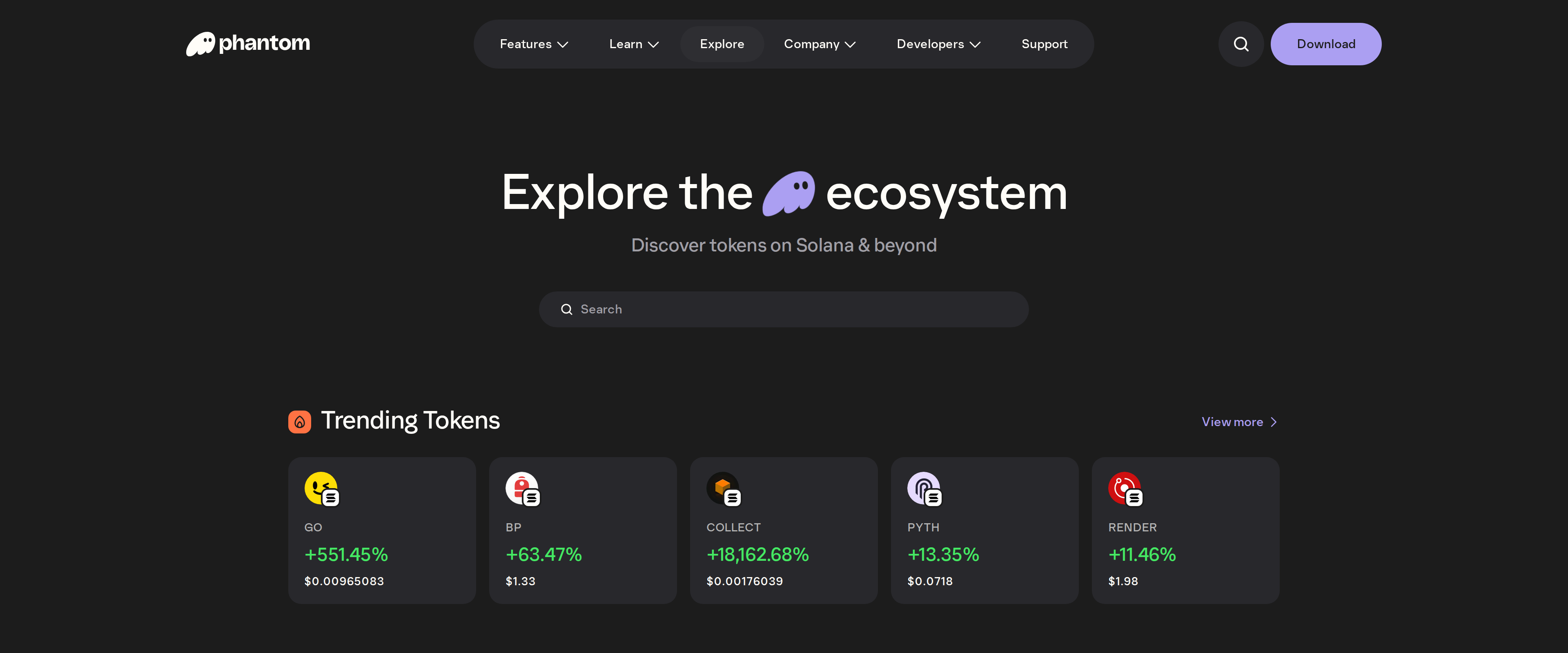
Phantom started as the extension every Solana user installed by default, and that reputation still holds. What has changed is the scope: opening the app today surfaces Solana, Ethereum, Base, Bitcoin, Polygon, Sui, HyperEVM and Monad from a single seed phrase, with an explore tab that lists trending tokens across the whole set rather than just Solana pairs.
Phantom's explore tab, showing token discovery across Solana, Ethereum and other supported chains
That breadth is real rather than cosmetic. Bitcoin addresses use Native SegWit and Taproot, the two formats most modern wallets and exchanges expect, and balances across every chain show up in a single portfolio view instead of a row of separate tabs. The gap is polish: the Bitcoin side of Phantom feels newer than the Solana side, without the years of interface refinement Solana users are used to.
Sending BTC through Phantom worked the way we expected, address book entries, a fee slider and a confirmation screen that matched what a Bitcoin-native wallet shows. What it lacks next to a dedicated Bitcoin wallet is coin control: there is no way to pick which UTXOs fund a transaction, a detail privacy-conscious Bitcoin holders care about and multi-chain wallets tend to skip entirely.
Gasless swaps solve a real problem, at a price
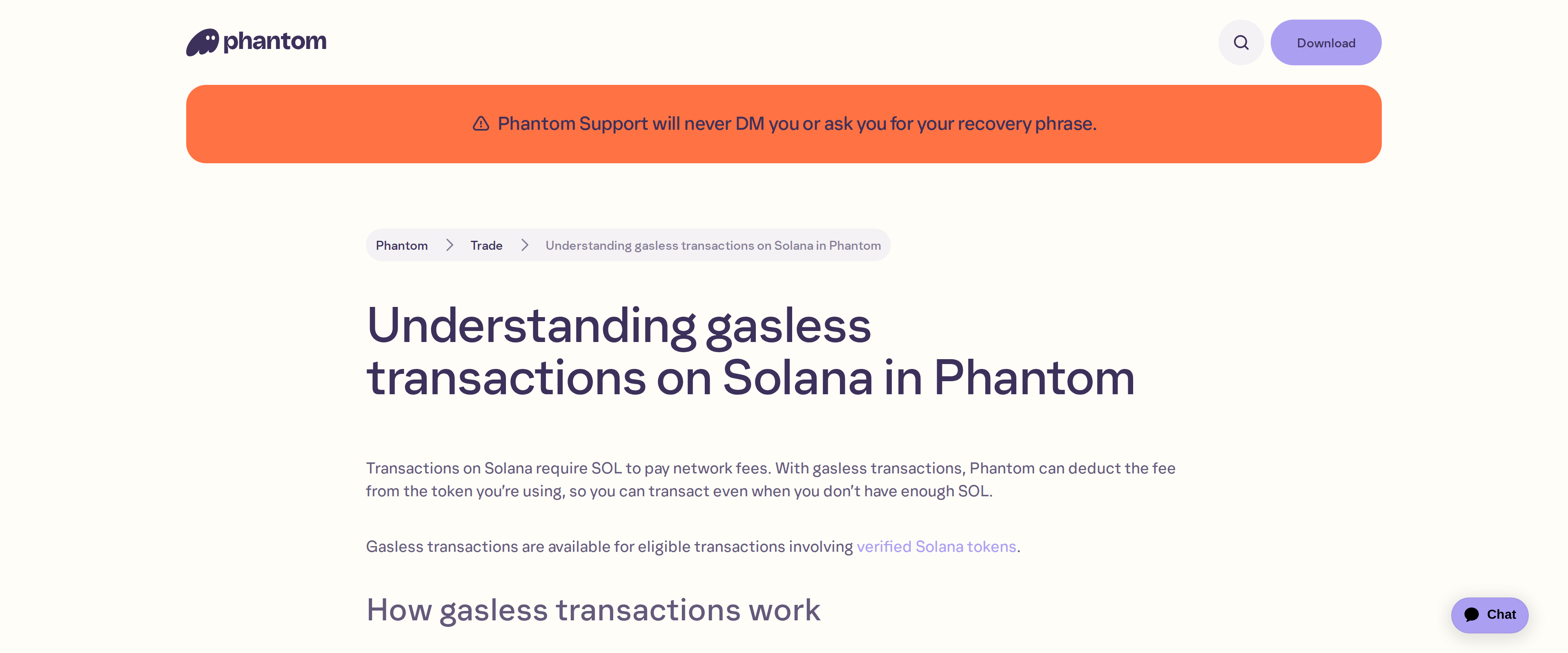
Every Solana transaction needs a small amount of SOL for network fees, which used to strand new users holding only a meme coin and nothing to pay gas with. Phantom's gasless swaps fix that by deducting the fee from the token being swapped into instead, so a trade completes even at a zero SOL balance (help.phantom.com).
Phantom's support article on gasless transactions, describing how the fee is deducted from the swapped token
Convenience carries a cost, though: gasless swaps take 0.85% of the tokens you receive, well above what a router like Jupiter charges directly. For a $50 swap the fee barely registers; on a $5,000 position it is $42.50 you would not pay going straight to a decentralized exchange. Treat the gasless option as a fallback for small trades and dead-SOL moments, not a default for anything sizeable.
Security: audited, but still a phishing target
Phantom is self-custodial, meaning the company never holds your keys and cannot recover funds if you lose the recovery phrase or approve a bad signature. Kudelski Security has reviewed the wallet's codebase, and Phantom runs a bug bounty paying up to $50,000 for a verified vulnerability, both of which are stronger guarantees than most competing extensions publish.
Phantom's security page, describing its self-custodial model and signing warnings
None of that stops targeted phishing. A fake update prompt spread password-stealing malware to Phantom users in 2022, and a 2025 lawsuit followed a reported $500,000 hack connected to the wallet. The lesson from both incidents is the same one every hardware wallet vendor repeats: Phantom's built-in scam detection catches known malicious contracts, but it cannot catch a recovery phrase you type into a fake support chat.
Desktop extension versus mobile app
We ran the same accounts on the browser extension and the iOS app for two weeks and found the two nearly identical in what they support, which is not always true of multi-chain wallets. The mobile app is where gasless swaps actually shine, since a phone user is more likely to run dry on SOL mid-trade than someone topping up from an exchange on desktop. The extension remains the better place to connect to dApps, since desktop browsers are still where most Solana and Ethereum sites expect a wallet popup.
Who should install it
If you already live in the Solana ecosystem and want Ethereum, Base or Bitcoin without switching apps, Phantom does exactly that job and does it faster than most alternatives we have opened. If you are moving five figures or more, pair it with a Ledger rather than leaving the balance sitting in the hot wallet, and route large swaps through a dedicated exchange to skip the 0.85% fee.
Newcomers picking a first wallet should still start somewhere simpler if they only hold one asset on one chain; Phantom's strength is breadth, and breadth adds a menu of settings a single-chain beginner does not need yet. Nothing here should be read as advice on which chain or token to hold.