Electrum review: is Bitcoin's oldest wallet still worth using?
Electrum has secured Bitcoin payments since 2011 and costs nothing to run, but fifteen years of longevity does not automatically beat Sparrow's newer privacy tooling. We installed 4.8.2 and moved coins through it to see if the old guard still holds up.
By The Hashmere Test Desk3 min read
7.6/107.6/10
Our verdict
Electrum still does the core job, a fast, free, open-source Bitcoin wallet with SPV verification and real hardware wallet support, but its interface has not kept pace with Sparrow's UTXO tools, and Lightning support remains a secondary feature bolted onto an on-chain wallet, not the reason to pick it.
Best for: Bitcoin holders who want a free desktop wallet with both on-chain and Lightning support in one app
Free and open source since 2011, with binaries signed by multiple named developers
SPV verification lets it confirm payments without downloading the full blockchain
Supports third-party hardware wallets and multisignature setups through plugins
One of the only lightweight desktop wallets that bundles both on-chain and Lightning in a single app
What held it back
The interface genuinely looks its age next to Sparrow or newer wallets
Lightning support is described by outside reviewers as still experimental, not a mature feature
Supports roughly half as many hardware wallet models as Sparrow, particularly for air-gapped QR devices
Default public Electrum servers can see which addresses belong to you, the same privacy gap Sparrow ships with too
Electrum shipped two years after Bitcoin itself and is still receiving updates in 2026, with version 4.8.2 as the current release. We installed it fresh, moved a small amount of Bitcoin through it, and paired it with a hardware wallet plugin to see whether fifteen years of continuous development has kept it relevant or just kept it alive.
The SPV model that made Electrum fast
Electrum's core trick has not changed since 2011: instead of downloading the entire Bitcoin blockchain like a full node, it uses Simplified Payment Verification, connecting to a network of Electrum servers that index the chain and prove your transactions are real without you storing hundreds of gigabytes yourself. This is why setup took us under two minutes and the wallet was usable within seconds of opening it, a real advantage over running your own full node just to check a balance.
The tradeoff, one Electrum states plainly rather than hides, is trust in whichever server you connect to for that verification. The default servers are decentralized and redundant, and your private keys never leave your machine regardless of which server you use, so the worst a malicious server can do is lie about balances, not steal funds.
Hardware wallets and multisig, through plugins
We tested Electrum's third-party plugin system by connecting a hardware signing device, and the pairing worked without needing a separate app open at the same time, everything ran inside Electrum itself. Multisignature wallets are supported natively too, useful for anyone splitting signing authority across multiple devices or people rather than trusting one seed phrase alone.
Where this falls short of the newer competition: independent comparisons count roughly twice as many supported hardware wallet models on Sparrow, particularly air-gapped devices that sign via QR code instead of a USB cable. If your security setup depends on one of those specific air-gapped models, check Electrum's plugin list before assuming support.
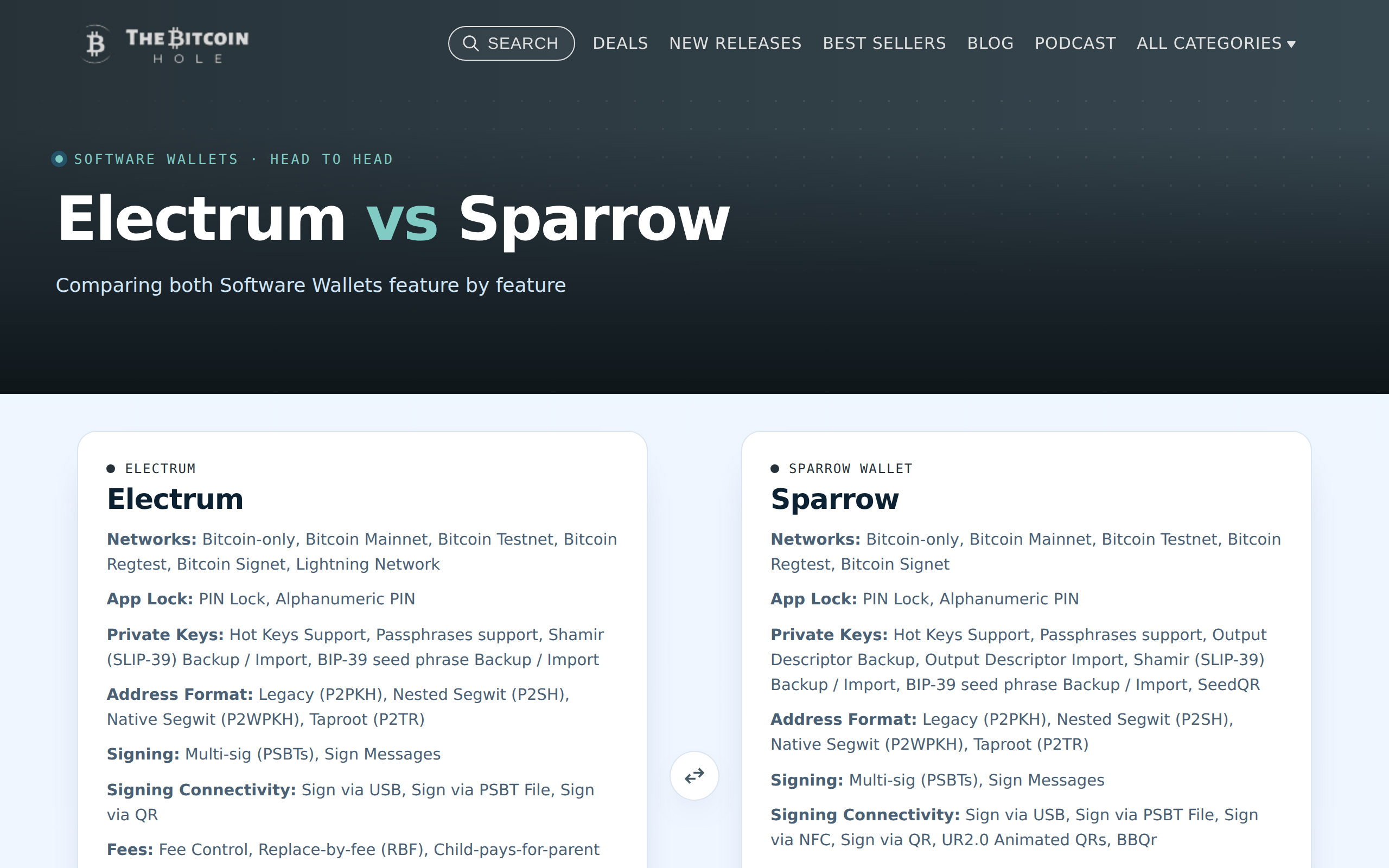
A feature-by-feature comparison of Electrum against Sparrow Wallet
Downloading it safely matters more than usual here
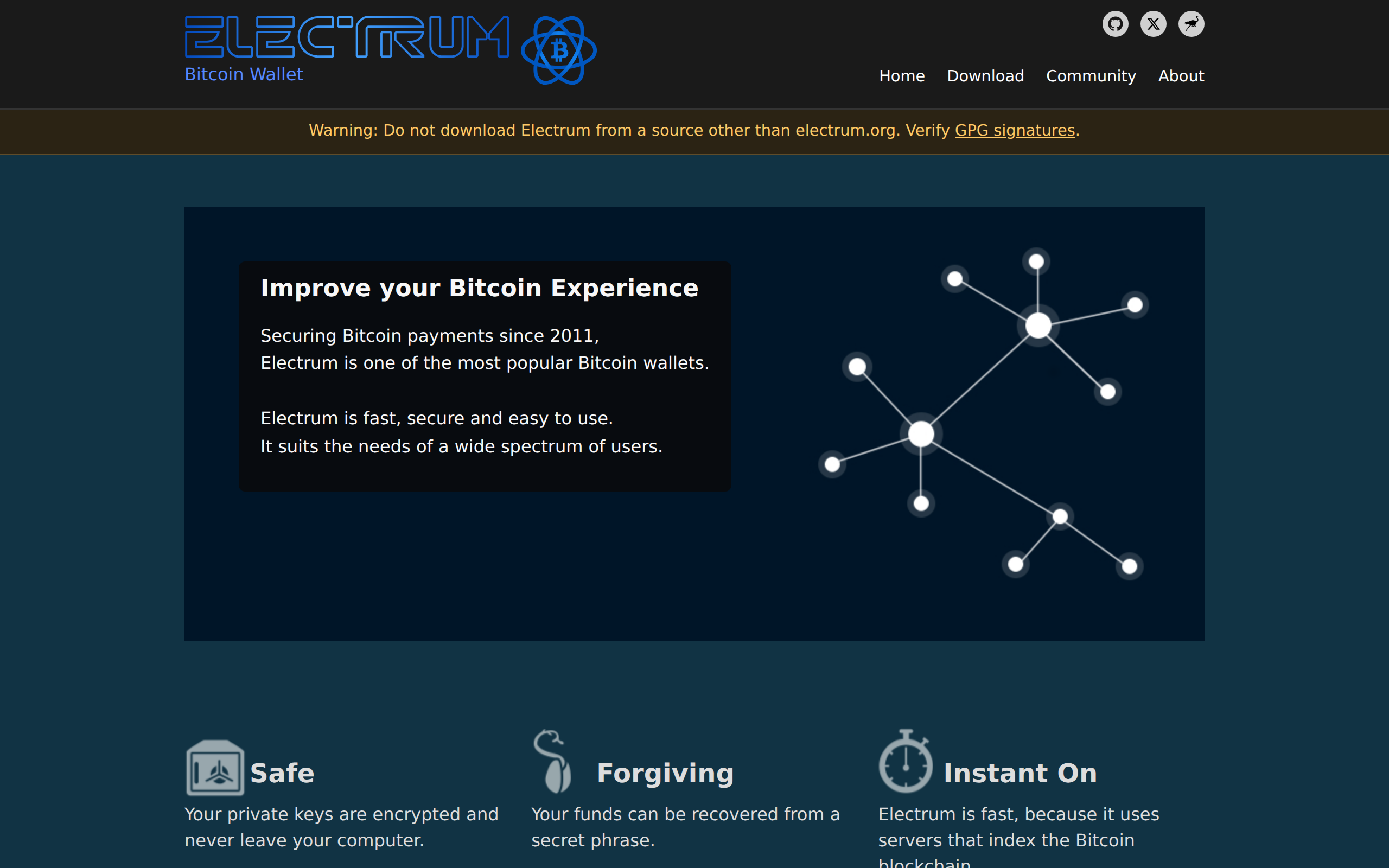
Electrum's own site carries a blunt warning: do not download it from anywhere but electrum.org, and verify the GPG signature before running it. That warning exists because fake Electrum installers have circulated for years, a real risk for any wallet old and popular enough to be worth impersonating. We downloaded the AppImage build for Linux and confirmed the signature against the developer keys listed on the download page before running it, a step that takes a few extra minutes and is worth doing every single time.
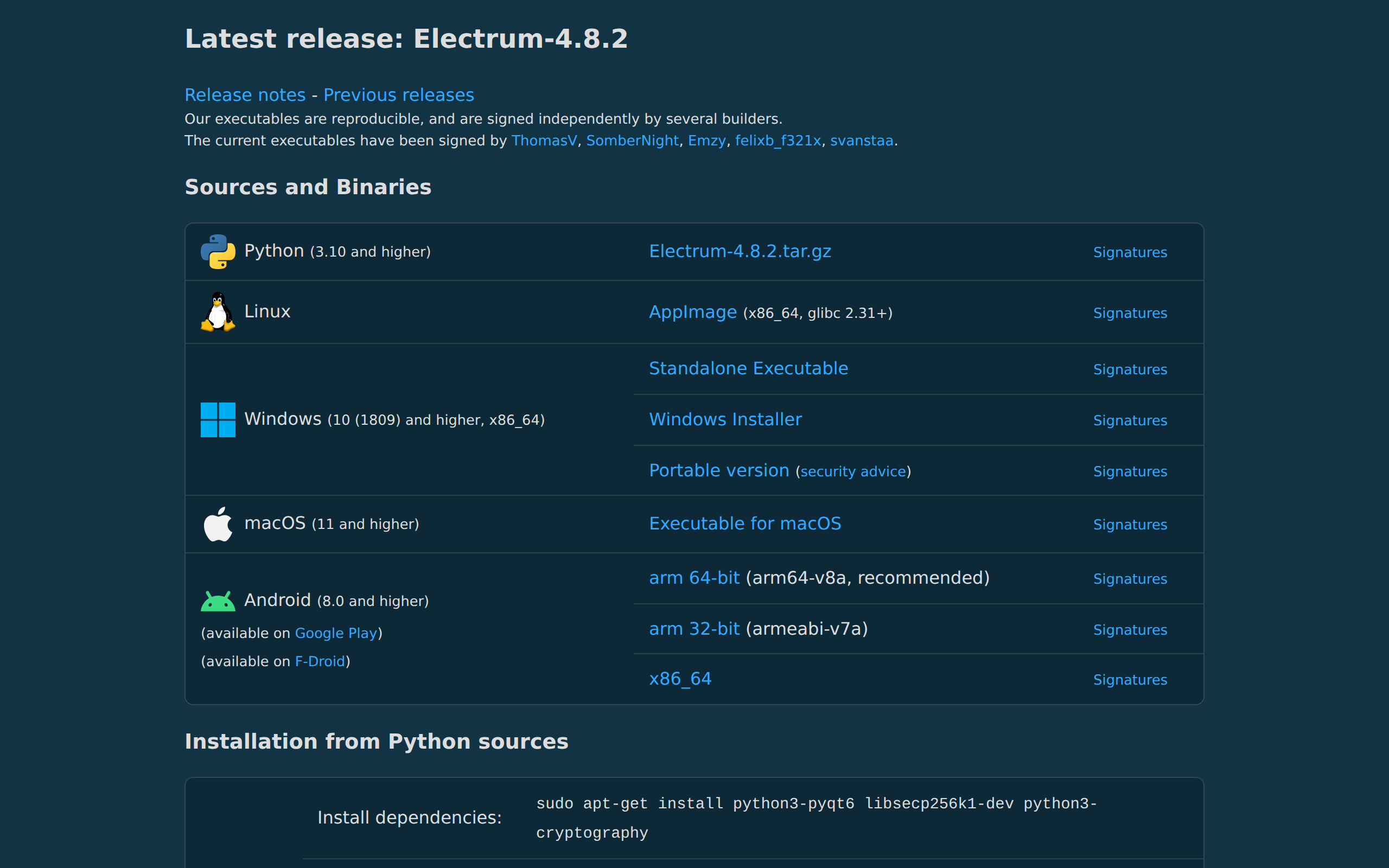
Electrum's download page, listing the current 4.8.2 release
The interface has not aged as gracefully as the code
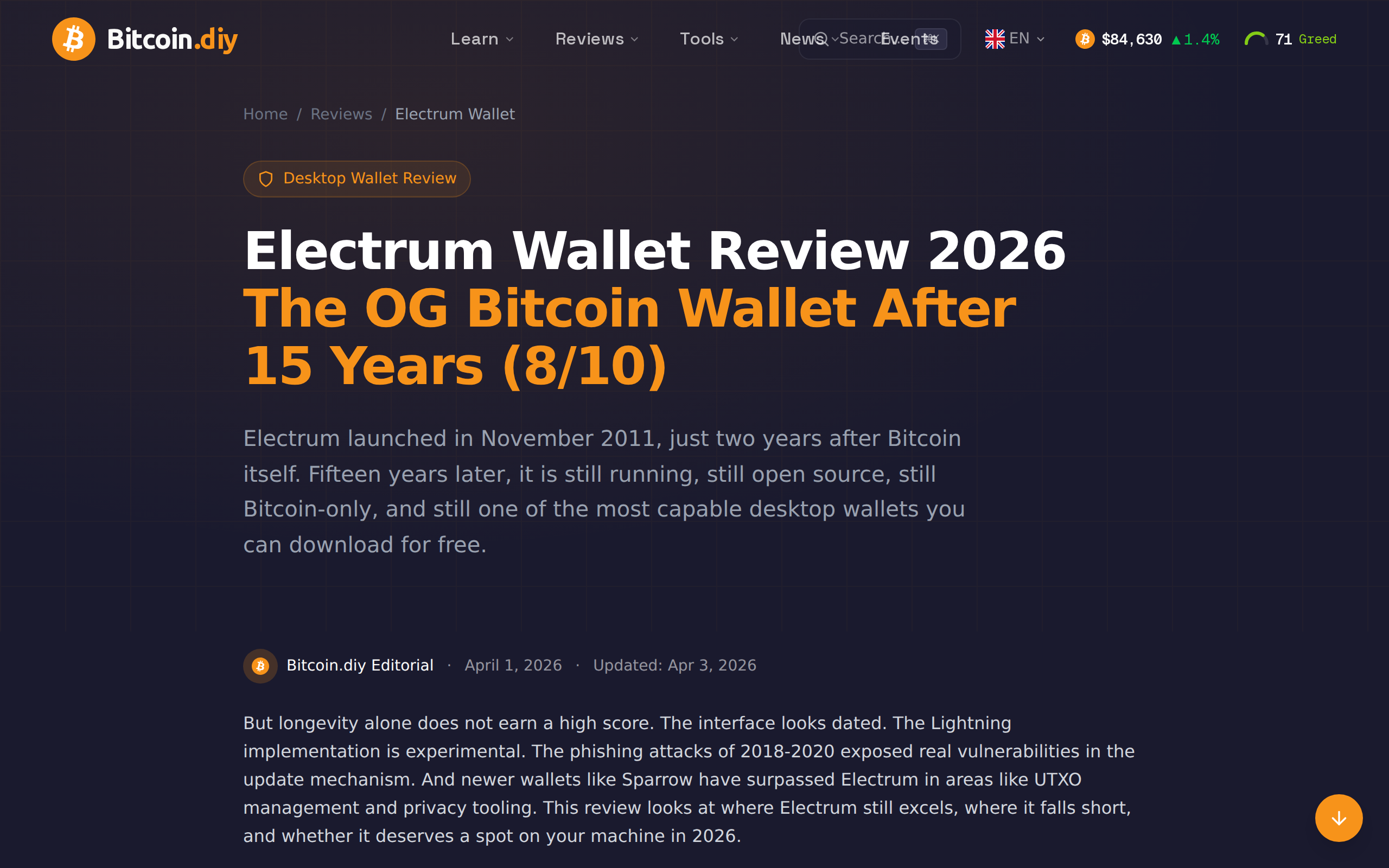
Independent reviewers, including a recent 8-out-of-10 writeup that credited Electrum's fifteen-year track record while docking points for its dated look, echo what we found ourselves: the window layout, fonts and menus feel like software from an earlier decade of desktop apps. It is not confusing once you learn where things are, but a first-time user coming from a modern mobile wallet will notice the gap immediately.
An independent review scoring Electrum's fifteen years of continuous development
Lightning support is the other soft spot. It works, and having on-chain and Lightning in one lightweight app is genuinely rare, but outside testing consistently describes the Lightning side as experimental rather than production-grade, so we would not route a large payment through it without a fallback plan.
Cold storage and watching-only wallets
Electrum also supports cold storage setups where the signing device stays permanently offline and a separate watching-only instance tracks balances and builds unsigned transactions for the offline machine to sign. We set this up across two computers during testing, and it worked as documented, though the process assumes a comfort with moving files between an online and offline machine that a first-time user will need to research before attempting on funds that matter.
Who should still use it
Pick Electrum if you want a free, auditable, Bitcoin-only wallet with real hardware support and you don't mind an interface that has not been redesigned in years; the security fundamentals hold up regardless of how the menus look. Pick Sparrow instead if UTXO-level privacy control or air-gapped hardware signing matters more to you than having Lightning bundled into the same app, since Sparrow has clearly overtaken Electrum on both fronts.
This review covers Electrum 4.8.2 as installed and tested by us, plus published comparisons from independent reviewers. It is not investment advice, and verifying your download's signature is a security step, not an optional formality.
Specifications
Price
Free
Latest version
4.8.2
License
MIT, open source
First released
November 2011
Platforms
Windows 10+, macOS 11+, Linux (AppImage), Android 8.0+